Albany Car Shipping and Auto Transport Companies: Essential Strategies for Comparing Transport Options, Preparing Your Vehicle, Managing Shipping Expenses, and Securing Reliable Delivery
@elliotullf478
Transporting a vehicle to or from Albany, New York, requires careful planning, a clear understanding of available shipping options, and the right auto transport company. Whether you are relocating for a new job, purchasing a vehicle from another state, sending a car to a family member, or arranging seasonal transportation, professional car shipping services can make the process more convenient and manageable. However, selecting the right provider involves more than requesting the lowest quote.\
\Before scheduling a shipment, it is important to evaluate carrier qualifications, compare transportation methods, understand pricing factors, and prepare your vehicle for pickup. Delivery schedules, insurance coverage, route accessibility, and communication practices also influence the overall experience. A well-organized approach helps reduce unexpected expenses and makes it easier to protect your vehicle throughout the journey.\
\This comprehensive guide explains how to compare Albany car shipping services, choose appropriate transport options, manage shipping expenses, prepare a vehicle for transit, and improve the likelihood of a smooth delivery. By understanding these essential considerations, vehicle owners can make informed decisions and select transportation arrangements that fit their schedules and budgets.\
\Understanding Car Shipping Services in Albany, NY\
\Albany serves as New York's capital and an important transportation center in the Capital Region. Its connections to major highways, including Interstate 87 and Interstate 90, help link the area with other parts of New York and destinations across the Northeast. These transportation routes can support vehicle shipments to nearby communities, major metropolitan areas, and locations farther away.\
\Nevertheless, shipping conditions vary depending on the pickup address, destination, carrier availability, vehicle specifications, and time of year. A shipment from a suburban driveway may require different arrangements than one originating from a downtown location with limited parking or restricted truck access.\
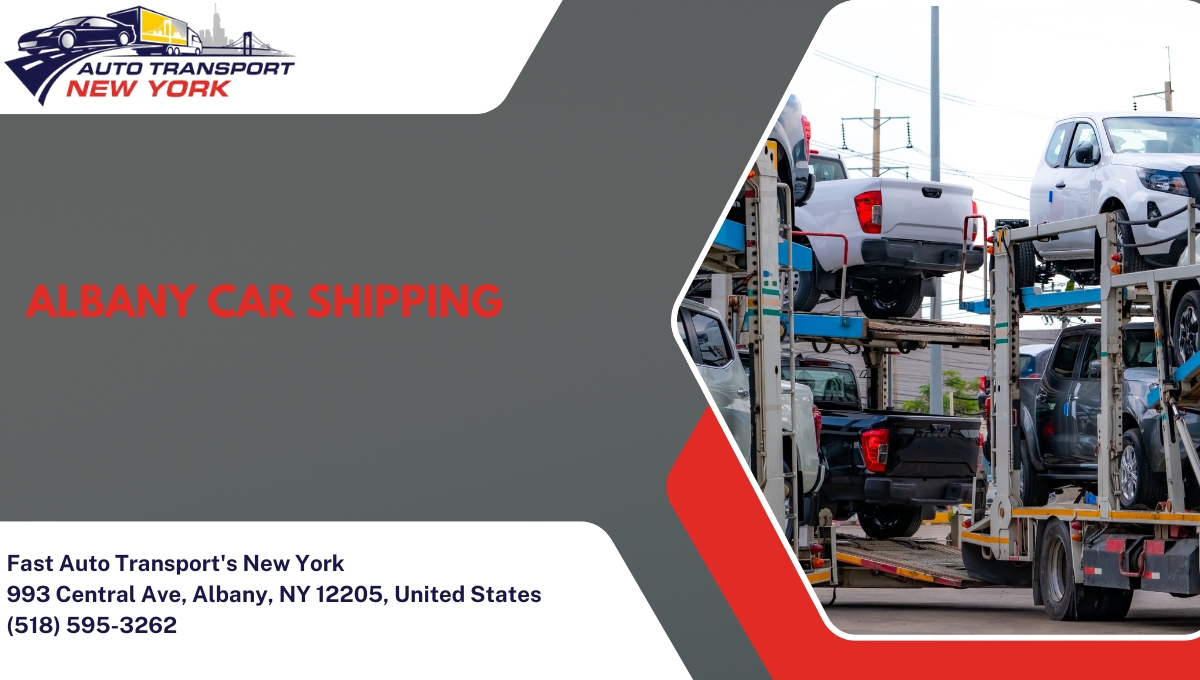
\Professional auto transport companies coordinate the movement of vehicles using specialized carriers. Depending on the service selected, a vehicle may travel on an open trailer, inside an enclosed trailer, or through a terminal-based transportation arrangement. Many companies also coordinate door-to-door service, expedited pickup, and long-distance shipping.\
\Who Can Benefit From Professional Vehicle Shipping?\
\- \
- \ Individuals relocating:\ People moving to or from Albany may prefer shipping a vehicle instead of driving it across several states.\ \
- \ Online vehicle buyers:\ Buyers purchasing cars from dealerships, auctions, or private sellers can arrange transportation directly to their preferred destination.\ \
- \ College students and families:\ Students attending colleges in another state may need seasonal or permanent vehicle transportation.\ \
- \ Military personnel:\ Service members receiving relocation orders may need help coordinating vehicle transportation around reporting dates.\ \
- \ Dealerships and businesses:\ Automotive businesses can use shipping services to move inventory between locations.\ \
- \ Classic and luxury vehicle owners:\ Owners of specialty vehicles may prefer enclosed transportation and additional handling precautions.\ \
Identifying your specific requirements early makes it easier to compare companies that specialize in the type of shipment you need.\
\How to Compare Albany Auto Transport Companies\
\Choosing among Albany auto transport companies requires a balanced assessment of price, service quality, credentials, insurance arrangements, and customer communication. Although a low estimate may appear attractive, it does not necessarily represent the best overall value. A slightly higher quote may include clearer scheduling, more suitable transportation equipment, or stronger customer support.\
\1. Verify Company Credentials and Operating Information\
\Start by identifying the company responsible for arranging your shipment. Some businesses operate as brokers, connecting customers with authorized motor carriers, while others transport vehicles using their own equipment. Both arrangements can be legitimate, but understanding the distinction helps establish who will handle each part of the process.\
\For interstate transportation in the United States, check the relevant company information through the Federal Motor Carrier Safety Administration (FMCSA). Depending on the business model, you may need to verify a broker's authority or a carrier's operating authority, registration, and applicable insurance information.\
\Request the company's legal business name and USDOT or MC number when applicable. Use official records rather than relying exclusively on claims displayed in advertisements. Verify that the details match the entity you intend to hire.\
\Additionally, ask who will transport the vehicle, whether a separate carrier will be assigned, and how you will receive the carrier's contact information before pickup.\
\2. Review Customer Feedback Carefully\
\Online reviews can reveal useful information about scheduling, communication, delivery coordination, and how a business handles unexpected problems. Rather than focusing exclusively on an average rating, read several recent reviews and look for consistent patterns.\
\Pay particular attention to comments about:\
\- \
- Whether pickup and delivery estimates were communicated clearly.\ \
- How promptly the company responded to questions or changes.\ \
- Whether final charges matched the agreed pricing terms.\ \
- How vehicle condition concerns were documented and resolved.\ \
- Whether customers received timely updates during transportation.\ \
A small number of negative reviews does not automatically disqualify a provider. However, repeated complaints about unexplained price increases, missed pickups, poor communication, or unresolved damage claims deserve careful consideration.\
\3. Compare Written Quotes Instead of Verbal Estimates\
\Request written quotes from several providers using the same shipment details. Comparing estimates becomes much easier when every company receives the same pickup and delivery locations, vehicle information, preferred dates, and transportation preferences.\
\Review each quote for the following details:\
\- \
- Total quoted transportation cost and any clearly identified additional fees.\ \
- Open or enclosed shipping arrangements.\ \
- Estimated pickup window and transit time.\ \
- Deposit requirements and remaining payment terms.\ \
- Cancellation, rescheduling, and refund policies.\ \
- Carrier assignment procedures and communication expectations.\ \
- Insurance information and the process for reporting damage.\ \
Do not assume that a preliminary estimate is a guaranteed price. Some quotes are based on market conditions and carrier availability, and the final arrangement may depend on the actual carrier assigned. Ask which elements are confirmed and which could change before agreeing to the shipment.\
\4. Evaluate Customer Service Before Booking\
\The quality of communication before booking can indicate how well a company explains its procedures. A professional representative should answer questions directly, describe the shipping process, and clarify the limits of any promises made.\
\Be cautious if a representative pressures you to pay immediately, refuses to explain cancellation terms, or guarantees an exact delivery time without acknowledging possible delays. Weather, traffic, equipment issues, and other customers' pickup locations can affect transportation schedules.\
\Reliable communication does not eliminate every problem, but it helps you understand what to expect and how concerns will be handled.\
\Choosing the Right Vehicle Transportation Method\
\One of the most important decisions involves selecting the transportation method. Open and enclosed carriers are the most common options for standard vehicle shipping, while terminal-based arrangements may be available in certain markets. Each approach offers different benefits, costs, and scheduling considerations.\
\Open Auto Transport\
\Open auto transport moves vehicles on trailers without fully enclosed walls or a roof. This method is widely used for everyday cars, sedans, SUVs, pickup trucks, and many dealership vehicles.\
\Because open carriers commonly transport multiple vehicles on established routes, they can offer a practical balance of price and availability. For many owners, this is an appropriate choice when shipping a standard vehicle that does not require specialized protection.\
\However, vehicles remain exposed to ordinary outdoor conditions during transit. Rain, dust, road debris, and other environmental factors may affect the exterior. Open transportation does not automatically mean a vehicle will be damaged, but it offers less environmental protection than enclosed shipping.\
\When Is Open Shipping Appropriate?\
\- \
- Transporting an everyday vehicle used for commuting.\ \
- Moving a family car during an interstate relocation.\ \
- Shipping a used vehicle purchased from a dealership in another state.\ \
- Managing transportation expenses while maintaining professional carrier service.\ \
Enclosed Auto Transport\
\Enclosed auto transport carries vehicles inside a covered trailer, offering additional protection from weather and road debris. It is often selected for classic cars, exotic vehicles, luxury automobiles, collector models, and vehicles with delicate finishes.\
\Some enclosed carriers offer specialized loading equipment or handling procedures for vehicles with low ground clearance. Owners should confirm these capabilities directly because equipment and service levels differ between providers.\
\Enclosed shipping generally costs more than open transportation. Availability may also be more limited, especially for specific routes or narrow pickup windows. Even so, the additional protection may justify the expense when transporting a high-value or unusually sensitive vehicle.\
\Door-to-Door Vehicle Shipping\
\Door-to-door shipping generally means the carrier aims to collect and deliver the vehicle as close as reasonably possible to the specified addresses. It does not necessarily mean the truck can enter every residential street or stop directly outside every home.\
\Large transport trucks require adequate turning space, road clearance, and safe loading areas. Narrow streets, low branches, restricted parking, construction zones, and local regulations can prevent access to certain locations.\
\In Albany, downtown streets and some residential neighborhoods may require an alternative meeting point. A nearby shopping center, broad commercial road, or approved parking area may be more practical if the carrier cannot safely reach the requested address.\
\Before confirming your booking, discuss the pickup location with the company and ask how alternate arrangements will be coordinated. Clear planning helps avoid last-minute confusion and potential additional charges.\
\Terminal-to-Terminal Shipping\
\Terminal-to-terminal service involves dropping off a vehicle at a designated facility and collecting it from another facility near the destination. This option may work for customers who can travel Albany car shipping Fast Auto Transport's New York to the terminals and accommodate the facilities' operating schedules.\
\Availability depends on the provider and route. Storage fees, facility hours, additional driving, and terminal handling arrangements may influence the total cost. Compare these expenses with door-to-door service before deciding that terminal shipping is less expensive.\
\Expedited and Scheduled Transportation\
\Expedited auto transport may be appropriate when a vehicle must move within a shorter timeframe. Depending on the provider, expedited service can involve priority dispatching, a narrower pickup window, or other scheduling accommodations.\
\These arrangements usually increase the price and do not eliminate circumstances outside the carrier's control. Before paying extra, confirm exactly what the expedited service guarantees. A guaranteed pickup window, for example, is different from a guaranteed delivery date.\
\For routine relocations, booking ahead and maintaining some flexibility may provide better value than requesting urgent service.\
\Understanding Albany Car Shipping Costs\
\Shipping expenses depend on several variables rather than a single standard rate. Distance is important, but the final price may also reflect vehicle size, transport type, route demand, seasonal conditions, pickup accessibility, and scheduling requirements.\
\Obtaining a customized estimate is the most practical way to determine the cost of moving your specific vehicle. A quote for a compact sedan traveling between major cities may differ significantly from the price for a large SUV moving between remote addresses.\
\Distance and Route Demand\
\Longer trips generally involve more fuel, driver time, and transportation resources. However, price does not always increase in direct proportion to mileage. Some long-distance routes benefit from frequent carrier traffic, while shorter trips to less accessible locations may involve additional coordination.\
\Albany's connections to major Northeast transportation corridors can be helpful, but the exact pickup and delivery points still matter. A route between established metropolitan areas may have different carrier availability than one involving a rural community or a destination far from major highways.\
\Vehicle Size, Weight, and Condition\
\Transport carriers have limited space and weight capacity. Compact vehicles often occupy less room than full-size trucks, oversized SUVs, or modified vehicles, which can influence pricing.\
\Vehicle condition also matters. A car that starts, steers, brakes, and rolls normally can usually be loaded using standard procedures. Inoperable vehicles may require a winch or specialized loading equipment, potentially increasing the cost.\
\Always disclose modifications such as lowered suspension, oversized tires, roof racks, aftermarket accessories, or other features that could affect loading. Accurate information helps the carrier determine whether the vehicle can be transported safely using the proposed equipment.\
\Seasonal Demand and Weather\
\Transportation demand can change throughout the year. Summer relocations, college schedules, holidays, and seasonal travel patterns may affect carrier availability on particular routes. Winter weather can also create scheduling challenges across New York and neighboring states.\
\During colder months, snow, freezing rain, and icy roads may delay pickups or deliveries. A company should explain how weather-related changes will be communicated and whether your contract includes any relevant rescheduling provisions.\
\When possible, plan the shipment in advance and avoid making essential travel arrangements that depend on an unrealistically narrow delivery window.\
\Open Versus Enclosed Pricing\
\Open shipping is commonly the more economical option because open carriers are widely used and can transport several vehicles on the same trip. Enclosed transport usually commands a premium because it involves different equipment and a more specialized service.\
\Rather than choosing solely on price, consider the value of the vehicle, its condition, your protection preferences, and the difference between the quotes. An everyday vehicle may not require enclosed transportation, while a rare collector car may warrant additional protection.\
\How to Avoid Unexpected Fees\
\Review the quote and contract before making a payment. Ask whether the price includes the agreed pickup and delivery locations, the selected trailer type, and any disclosed vehicle handling requirements.\
\Clarify whether charges may apply for:\
\- \
- Changes to pickup or delivery locations.\ \
- Vehicle dimensions or modifications not disclosed in advance.\ \
- Inoperable vehicles that require specialized loading.\ \
- Storage or terminal handling, if applicable.\ \
- Missed appointments or customer-requested rescheduling.\ \
- Additional services not included in the original agreement.\ \
Request written confirmation of any changes to the agreed price. Avoid paying unexpected charges without understanding their basis, and keep copies of the quote, contract, receipts, and messages related to the shipment.\
\Preparing Your Vehicle for Safe Transportation\
\Proper vehicle preparation helps reduce delays and makes it easier to document the car's condition. Before the scheduled pickup, complete a basic inspection, remove unnecessary belongings, and confirm that the vehicle meets the carrier's requirements.\
\1. Clean the Vehicle Before Pickup\
\Wash the exterior before the carrier arrives. A clean surface makes it easier to identify existing scratches, dents, paint damage, and other imperfections during the initial inspection.\
\Pay attention to the roof, bumpers, doors, wheels, mirrors, and lower body panels. If the vehicle cannot be washed immediately before pickup, clean enough of the exterior to make a reasonable inspection possible.\
\2. Photograph the Vehicle's Condition\
\Take clear photographs from several angles before handing over the keys. Capture the front, rear, both sides, wheels, roof, windshield, and any existing damage. Close-up photographs are particularly useful for documenting scratches, chips, dents, and cracked glass.\
\Include the date in your records and retain the original image files. If the vehicle has interior damage or valuable accessories that must remain inside, document those details separately.\
\During pickup, review the carrier's vehicle condition report, often called a bill of lading. Make sure existing damage is recorded accurately and retain your copy. The report is an important reference if you need to discuss the vehicle's condition at delivery.\
\3. Remove Personal Belongings\
\Most auto transport arrangements require personal belongings to be removed from the vehicle. Items inside the cabin or trunk can shift during transit, create additional weight, or complicate insurance and carrier responsibility.\
\Remove the following whenever possible:\
\- \
- Luggage, clothing, and household goods.\ \
- Electronics, chargers, and removable accessories.\ \
- Important documents, valuables, and spare cash.\ \
- Garage remotes, toll devices, and personal identification.\ \
- Loose items in door pockets, cup holders, and the trunk.\ \
Do not assume that personal items left inside are covered by the carrier's cargo insurance. If an exception is permitted, obtain the company's written approval and confirm any applicable restrictions before loading.\
\4. Check Fuel and Mechanical Condition\
\For a running vehicle, maintain only the amount of fuel required by the carrier's instructions. A low fuel level reduces unnecessary weight while leaving enough fuel for moving the vehicle during loading or unloading when needed.\
\Check the battery, tires, brakes, steering, and visible fluid leaks. Tell the company about mechanical problems before pickup rather than waiting for the driver to discover them at the loading location.\
\If the vehicle is inoperable, explain whether it can roll, steer, and brake. Accurate details help determine the necessary equipment and whether the shipment requires additional handling arrangements.\
\5. Secure Accessories and Loose Components\
\Remove detachable bike racks, roof cargo boxes, temporary antennas, and other accessories when practical. Retract or secure movable components according to the manufacturer's instructions, and fold in the side mirrors if appropriate.\
\Aftermarket modifications should be disclosed in advance. Low ground clearance, oversized spoilers, lifted suspension, and wide tires can affect loading clearance or vehicle placement on the carrier.\
\Never make modifications or remove components that could compromise vehicle safety just to simplify transport. If you are unsure how to prepare a particular feature, ask the carrier for specific guidance.\
\6. Disable Alarms and Provide Necessary Instructions\
\Disable sensitive aftermarket alarms when possible and explain any special operating requirements to the driver. Confirm that the keys provided are sufficient to move and secure the vehicle safely.\
\If the vehicle has an electronic parking brake, unusual starting procedure, or battery-related limitation, notify the carrier before pickup. Clear instructions can prevent avoidable loading problems.\
\Scheduling Pickup and Delivery in Albany\
\Effective scheduling helps ensure that your vehicle is available when the carrier arrives and that someone can inspect it at delivery. Before selecting dates, consider your work commitments, travel plans, housing arrangements, and access to both addresses.\
\Book Early When Possible\
\Contact auto transport providers as soon as your moving dates become reasonably certain. Booking in advance gives the company more time to arrange a suitable carrier, particularly during busy moving periods or when you require enclosed transport.\
\Early planning does not guarantee a particular pickup date or price, but it can reduce the pressure associated with last-minute arrangements. If your dates remain uncertain, ask how flexible booking terms work and what happens if your schedule changes.\
\Understand Pickup Windows\
\A pickup window is an estimated period during which the carrier expects to collect your vehicle. It is not always an appointment for a specific hour. Drivers coordinate multiple vehicles and must account for traffic, loading times, and changing road conditions.\
\Ask how much notice you will receive before arrival and who will contact you with updates. Keep your phone accessible and provide a reliable alternate contact if you will be unavailable.\
\Coordinate Access at Both Locations\
\Make sure the pickup and delivery addresses are suitable for a large transport truck. If either location has restricted access, arrange an alternative meeting point in advance.\
\For apartment complexes, residential developments, and commercial properties, check whether parking or vehicle loading requires permission. Confirm that the person receiving the car can reach the agreed location and complete the inspection when the driver arrives.\
\Allow for Transit-Time Variations\
\Transit time depends on the route, total distance, carrier schedule, weather, traffic, and other operational factors. Long-distance shipments may also involve several pickup and delivery stops along the way.\
\Ask for an estimated delivery window and plan around a reasonable margin. If you need the car for a flight, work commitment, or important appointment, avoid arranging the event immediately after the earliest possible delivery estimate.\
\Insurance Coverage and Vehicle Protection\
\Insurance is an essential part of evaluating auto transport services. Before booking, understand what protection applies during loading, transportation, and unloading, and how responsibility is handled if damage occurs.\
\Ask for Written Insurance Details\
\Request information about the motor carrier's applicable cargo insurance and any relevant limitations. If a broker arranges the shipment, clarify how the broker and carrier divide their responsibilities and which company should be contacted about a claim.\
\Ask whether the coverage applies to your particular vehicle, whether deductibles or exclusions apply, and how the declared vehicle value is treated. The specific terms of the policy and shipping agreement matter more than a general statement that a company is insured.\
\Do not assume that every type of loss is covered. Personal belongings, pre-existing damage, mechanical failures, and certain accessories may be treated differently under the applicable policy. Contact your own auto insurer if you need clarification about whether your existing policy offers any additional protection during transport.\
\Understand the Bill of Lading\
\The bill of lading documents important details about the shipment, including vehicle identification and its recorded condition at pickup and delivery. Review the document carefully before signing.\
\If the driver identifies existing damage, confirm that the description is accurate. Keep your copy and compare it with the delivery inspection report. If you disagree with an entry, raise the issue immediately and request that the documentation reflect the facts as accurately as possible.\
\Inspect the Vehicle Before Finalizing Delivery\
\At delivery, examine the vehicle in good lighting when circumstances allow. Compare its condition with your pickup photographs and the original inspection report. Check the body panels, bumpers, windows, mirrors, wheels, and other visible areas.\
\If you notice new damage, document it with photographs and ensure the issue is recorded on the delivery paperwork before signing when possible. Notify the carrier and the appropriate claims contact promptly, then follow the written claim procedures and deadlines that apply to your shipment.\
\Do not rely exclusively on a verbal promise that a problem will be handled later. Keep written records of the damage, communications, relevant documents, and any repair estimates. Prompt documentation can help establish what happened and support a claim review.\
\Special Considerations for Long-Distance Car Shipping\
\Long-distance transportation requires coordination between the pickup location, carrier schedule, route, and final delivery point. A vehicle moving from Albany to another region may cross several states and encounter changing weather, traffic, and road conditions.\
\Choose a Provider Familiar With Your Route\
\Ask whether the company regularly arranges shipments along your intended route. Familiarity with a route can help a provider estimate scheduling requirements and explain typical pickup and delivery arrangements.\
\However, route experience alone does not guarantee a particular price or transit time. Compare the company's current carrier availability and service terms instead of relying on general claims about how frequently it operates in a region.\
\Consider Regional Weather Conditions\
\Winter shipments involving Albany may encounter snow, ice, freezing rain, or reduced visibility. These conditions can affect roads throughout New York and neighboring states, potentially changing carrier schedules.\
\During colder months, leave room in your plans for weather-related delays. If your vehicle is being transported to a region with different temperatures, confirm that it is prepared according to the manufacturer's recommendations and can safely tolerate the expected conditions before pickup.\
\Keep Essential Transportation Arrangements Flexible\
\If you are relocating, consider how you will travel while the vehicle is in transit. Rental cars, public transportation, rideshare services, or assistance from family members may help bridge the gap between your departure and vehicle delivery.\
\Build these arrangements into your moving budget rather than assuming the car will arrive on a particular day. A flexible backup plan can reduce stress if the carrier experiences a delay.\
\Common Mistakes to Avoid When Hiring Car Shippers\
\Even well-planned shipments can become difficult when customers overlook important contract details or make assumptions about the transportation process. Avoiding a few common mistakes can improve your experience and help prevent unnecessary costs.\
\Choosing Only by the Lowest Quote\
\An unusually low estimate may not reflect current carrier availability or the actual cost of the requested shipment. Some preliminary quotes can change when a carrier is assigned or when the vehicle details are clarified.\
\Compare the total terms, not just the advertised number. A competitive quote should be supported by a clear explanation of the service, payment obligations, scheduling process, and potential changes.\
\Providing Incomplete Vehicle Information\
\Failing to disclose the vehicle's size, condition, or modifications can create loading problems. A carrier may need different equipment if the car is inoperable, unusually low, oversized, or otherwise difficult to handle.\
\Provide accurate details from the beginning so the company can arrange appropriate transportation and calculate a more realistic price.\
\Ignoring Cancellation and Payment Terms\
\Before paying a deposit, understand when it becomes refundable, whether a cancellation fee applies, and what happens if the carrier cannot meet the expected pickup window. Clarify whether payment is collected by the broker, carrier, or another authorized party.\
\Keep receipts and avoid making payments through arrangements that the company cannot adequately explain or document.\
\Failing to Document Vehicle Condition\
\Skipping photographs or rushing through the pickup inspection can make it harder to distinguish existing damage from new damage. Allow enough time to inspect the vehicle at both ends of the journey.\
\Document concerns immediately, preserve the paperwork, and follow the company's stated process for reporting damage or missing items.\
\Assuming Delivery Is Guaranteed on an Exact Date\
\Estimated transit dates are not always guaranteed appointments. Delays can arise from weather, traffic, carrier scheduling, mechanical issues, or access restrictions.\
\Ask what the company actually guarantees and what remedies apply if the schedule changes. Make backup arrangements for essential travel rather than depending on an estimate as if it were a fixed appointment.\
\A Practical Checklist for Hiring Albany Car Shipping Services\
\Use this checklist when comparing providers and preparing for your shipment. Completing each step can help you keep the process organized from the initial quote through final delivery.\
\- \
- Define the pickup and delivery addresses.\ \
- Confirm the vehicle's year, make, model, dimensions, and running condition.\ \
- Decide whether open or enclosed transport is appropriate.\ \
- Request written quotes from multiple qualified providers.\ \
- Verify relevant company and carrier credentials.\ \
- Review customer feedback for consistent service patterns.\ \
- Compare insurance information, cancellation terms, and payment requirements.\ \
- Confirm the pickup window and estimated transit time.\ \
- Check whether both locations can accommodate a transport truck.\ \
- Remove personal belongings and unnecessary accessories.\ \
- Clean the vehicle and photograph its condition.\ \
- Review and retain the pickup inspection report.\ \
- Keep the company and carrier contact information accessible.\ \
- Inspect the vehicle at delivery and document any new damage.\ \
Questions to Ask Before Booking an Auto Transport Company\
\How is my vehicle transported?\
\Ask whether the shipment will use an open or enclosed carrier and whether the company operates as a broker or a motor carrier. Confirm which provider will physically transport the vehicle and how the assignment will be communicated.\
\Is the quoted price guaranteed?\
\Request a clear explanation of whether the quote is binding, estimated, or subject to carrier availability. Find out which circumstances can change the price and whether any additional charges require your approval.\
\What happens if pickup is delayed?\
\Ask how delays are communicated, whether your pickup window can change, and what options are available if the scheduled arrangement no longer works for you. Review any cancellation or rescheduling fees in writing.\
What insurance applies to my vehicle?\
\Request the relevant insurance details and ask about exclusions, deductibles, and claims procedures. Make sure you know who to contact if damage is discovered during delivery.\
\Can the carrier reach my address?\
\Confirm whether the truck can safely access both locations. If a direct pickup or delivery is not possible, agree on an alternative location and clarify whether the change affects the cost.\
\What should I do if damage is discovered?\
\Ask how to record damage on the bill of lading, which photographs or documents are required, and how quickly a claim must be submitted. Retain all records and follow the written procedure provided by the responsible company.\
\Frequently Asked Questions About Albany Car Shipping\
\How do I find the best Albany car shipping company?\
\Compare written quotes, verify relevant operating credentials, read recent customer reviews, and examine insurance information and contract terms. The best choice is a provider that offers a suitable transport method, clear communication, reasonable pricing, and transparent policies rather than simply the lowest advertised rate.\
\How much does Albany auto transport cost?\
\The price depends on distance, vehicle size and condition, carrier type, route demand, pickup accessibility, season, and scheduling requirements. Open transport is generally less expensive than enclosed shipping. Request current quotes based on your exact shipment details for an accurate comparison.\
\Is open or enclosed transport better?\
\Open transport is commonly suitable for everyday vehicles and is often more economical. Enclosed transport offers additional protection from weather and road debris, making it worth considering for classic, luxury, exotic, or collectible vehicles. Your choice should reflect the vehicle's value, condition, and protection needs.\
\Can I ship an inoperable vehicle from Albany?\
\Many auto transport providers can arrange transportation for inoperable vehicles, but the vehicle's condition must be disclosed in advance. Tell the company whether it can roll, steer, and brake. Specialized loading equipment may be necessary, and additional charges may apply.\
\Should I remove everything from my car before shipping?\
\Yes, removing personal belongings and loose items is generally recommended and may be required by the carrier. Personal property may not be covered by the carrier's insurance and can create loading or safety concerns. Ask the provider about any permitted exceptions before pickup.\
\Does door-to-door shipping mean the driver will come to my driveway?\
\Not necessarily. Door-to-door service generally aims to collect and deliver the vehicle near the requested addresses, but large trucks may not be able to access narrow streets, restricted developments, or locations with insufficient loading space. An agreed alternative meeting point may be necessary.\
\How far in advance should I schedule vehicle transportation?\
\Booking as early as practical gives the company more time to coordinate a carrier and accommodate your preferred dates. Several weeks of advance planning can be helpful for busy moving seasons or specialized transport, although the ideal lead time depends on route availability and service requirements.\
\
What should I do if my vehicle arrives with damage?\
\Photograph the damage, compare it with your pickup records, and document the issue on the delivery paperwork when possible. Notify the carrier and the appropriate claims contact promptly, retain all supporting documents, and follow the applicable written claims procedure and deadlines.\
\Can I leave fuel in the vehicle during transport?\
\Carriers commonly request a low fuel level rather than a full tank, but the exact requirement can vary. Follow the provider's instructions and maintain enough fuel for any necessary loading or unloading procedures.\
\Is the cheapest car shipping quote always the best choice?\
\No. A low quote may not include every required service or may be based on uncertain carrier availability. Evaluate the complete agreement, including pickup timing, insurance details, payment conditions, cancellation terms, and communication practices, before making your decision.\
\Final Thoughts: Planning a Secure and Convenient Vehicle Shipment\
\Finding the right Albany car shipping service involves more than arranging a truck and choosing a delivery date. Vehicle owners should compare transportation methods, review company credentials, understand the complete pricing structure, and establish clear expectations before signing an agreement.\
\Open auto transport may offer a practical solution for everyday vehicles, while enclosed shipping can provide additional protection for valuable or specialty automobiles. Door-to-door arrangements may reduce the need for extra travel, provided both locations can accommodate the carrier. Regardless of the service selected, accurate vehicle information and thorough documentation remain essential.\
\Preparation also plays a major role in protecting your vehicle. Cleaning the exterior, photographing existing damage, removing personal belongings, checking mechanical condition, and reviewing the bill of lading can help create a clear record of the shipment. At delivery, a careful inspection and prompt documentation of any concerns can support a more organized claims process.\
\Ultimately, the most suitable auto transport company is one that combines transparent pricing, appropriate carrier arrangements, clear communication, and well-defined service terms. By comparing providers carefully and planning each stage of the journey, you can manage shipping expenses, reduce avoidable complications, and improve the likelihood of a smooth vehicle delivery to or from Albany, New York.\
Contact Us:
Address: 993 Central Ave, Albany, NY 12205, United States
Phone: (518) 595-3262